Tuesday, December 21, 2010

What is Gratitude, Really?

30 Days of Gratitude- Day 22Image by aussiegall via Flickr
Gratitude is more than feeling of thankfulness or appreciation for gifts or favors. It’s a complex feeling of “self-reflection, the ability to admit that one is dependent...and the humility to realize one’s own limitations.” -- Dr. Robert Emmons, professor of psychology at the University of California-Davis and an authority in gratitude research.

In a study of undergraduates, one group listed five things for which they were grateful, the second listed five annoying things, and the third listed five things that occurred. The students also completed questionnaires about their physical and mental health before, during and after the study.  

The results were telling! The group that listed things for which they were grateful felt better about their lives, had fewer health concerns, and exercised more than the other groups.

Other studies reveal that negative words, even silent, negative thoughts, darken a mood while positive ones, expressions of thanks, encouragement and appreciation lighten a mood. 

I find, for myself, that gratitude and worry are mutually exclusive.  When I pause to appreciate, I set worries aside – almost as if I were physically turning my head away. Worries and gratitude don’t “go together!”

This thinking may be on the mark: “Being grateful also forces people to overcome… ”negativity bias” the innate tendency to dwell on problems, annoyances and injustices rather than upbeat events. Focusing on blessings can help ward off depression and build resilience in times of stress, grief or disasters,” according to Dr. Emmons. 

Lou and I are grateful to G-d for giving us a life of pleasure and the opportunity to enjoy the radiance of the Divine Presence. Professionally Goodcopy has been blessed with a talented staff, expertise which we developed together, sophisticated equipment and an establishment that has enabled us to have forty-two years (and counting!) of experience with valued customers. 


Enhanced by Zemanta

Tuesday, December 14, 2010

Gratitude: A Whale of a Story

A humpback whale breachingImage via Wikipedia
A December, 2005 front page story of the San Francisco Chronicle, reported on a female humpback whale that had become entangled in a spider web of crab traps and lines.

Just east of the Farallon Islands (outside the Golden Gate), on the humpbacks' usual migratory route, a fisherman spotted a 45- to 50-foot female humpback, estimated to weigh 50 tons.

She was weighted down by hundreds of pounds of traps that caused her to struggle to stay afloat. She also had hundreds of yards of line rope wrapped around her body, her tail, her torso, a line tugging in her mouth.

The fisherman radioed an environmental group for help. Within a few hours, the rescue team arrived and determined that she was so snarled, the only way to save her was to dive in and untangle her.

They worked for hours with curved knives and eventually freed her. This daring rescue was believed to be the first successful attempt on the West Coast to free an entangled humpback.

When she was free, the divers say she swam in what seemed like joyous circles.She then came back to each and every diver, one at a time, and nudged them, pushed them gently around as she were thanking them. Some said it was the most incredibly beautiful experience of their lives.

The man who cut the rope out of her mouth said her eyes were following him the whole time, and he will never be the same.

We at Goodcopy hope that you and your family are privileged to be surrounded by people who will help you get untangled from the things that are binding you and that you always know the joy of giving and receiving gratitude.


Enhanced by Zemanta

Wednesday, December 1, 2010

Encouraging Gratitude in the Season of Giving and Receiving!


Gifts are truly lovely things, and there is pleasure in giving and receiving. However, in this season of shopping, there's also a place to acknowledge the valuable gifts we already have! Isn't that what Chanukah (evening of December 1st) and Christmas (December 25th) should be, appreciation of what we have?!

From the recent Wall Street Journal article by Melinda Beck, gratitude is good for your happiness and good for your health.

“In an upcoming paper in the Journal of Happiness Studies, Dr. Froh and colleagues surveyed 1,035 high school students and found that the most grateful had more friends and higher GPA’s while the most materialistic had lower grades, higher levels of envy and less satisfaction with life. “One of the best cures for materialism is to make somebody grateful for what they have,” says Dr. Froh.

It’s worth it: Children who are grateful have better grades, set higher personal goals, exhibit greater satisfaction with their lives, tend to be less materialistic, and are more likely to “give back.” Those are tremendous benefits from a single characteristic!!!  

Here are some approaches to encourage gratitude in kids:

  • A gratitude journal with one to three specific good things that happened during the day

  • Think and speak positively; negativity in thoughts and words promotes negative attitudes

  • Pause during the day and pay attention to your environment, views, sounds, smells, etc.

  • Swap gratitude lists with a friend as appreciation, not as bragging

  • Speak positively; negativity in thoughts and words breeds more negativity

  • Visit, call, or write a letter with thanks to someone who has helped you

  • Keep good memories of vacations, excursions, special events with pictures and postcards and notes

  • Count your blessings not sheep at the end of the day (see another entry for all the lyrics!)

For the record, gratitude is good for adults as well: Adults with gratitude are more optimistic, have more social satisfaction, sleep better, exercise more, and have less depression, envy, and fewer physical complaints. Wow! I hope I didn’t put my gratitude away on Thanksgiving with all the platters and bowls and china!

Monday, November 22, 2010

Gifts for Grandchildren

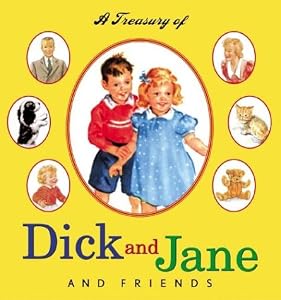
Cover of "Storybook Treasury of Dick and ...Cover via Amazon
Gifts for Grandchildren

It’s the official kickoff of the gift giving season with the classic questions:

What do the children want (that I would like to get them)?  
How much will this cost and/or am I willing to spend?!
(Some people reverse these questions!)

I have had my best success in a number of ways:

1)      Go to a great store or department that provides service in one of the major gift areas (toys, clothes, electronics, books and magazines). Then just ask an associate what’s “hot” for offspring in your age, gender, interest, and budget categories -- by now they have seen the patterns and can advise you.

2)      The internet offers an endless supply of options. For a fee and sometimes for free, there’s no worry about wrapping, packing, and shipping:  


Some great sites for young children are http://rompstore.com/ or  http://www.gummylump.com/, or http://thebabygardner.com/ .

3)      Bring the child a small token gift or candy, and then take them shopping for their gift. It’s a great chance to spend time together and learn more about them and their interests, and by then there should be after-holiday sales!

4)      Give them an experience (ideally with you!). It might be theater or sports tickets, special lessons, summer camp, a manicure.

5)      Money, not a gift card which can be misplaced and/or forgotten (unless of course, it’s at http://www.goodcopy.com/ for your favorite young entrepreneur!).

6)      Actually it might seem silly at first, but getting your young babysitter, dog walker, yard raker their own business cards does make for a very cool personalized present.

Finally, if you discover a hit, don’t be afraid to stick with it! A number of years ago, I revisited my own beginning classic reader, “Storybook Treasury of Dick and Jane and Friends,” and gave it as a gift to all the young children I knew. The kids adored it! (However, they read it over and over and over, and their parents hated it!!!!  I thought it a small price to pay for a love of literature.)

Happy gift giving!
Enhanced by Zemanta

Wednesday, November 3, 2010

Social Bullying to a New Level?

Bullying on IRFE as of March 5, 2007 (the firs...Image via Wikipedia
Social Bullying to a New Level
Are there more nasty, little girls or are we just noticing it more?   Do “helicopter” parents hover and take every small slight to heart? I don’t think so. Look at how devastating it is: 

In the case of a little girl named Caroline Port, the torment didn’t begin until first grade. Within months of starting at a private elementary school in suburban St. Louis, Caroline, now 9, was waking up with night terrors, sleepwalking and crying excessively. When her mother, Karen Port, met with Caroline’s teacher, she learned that her daughter was being ostracized. (Italics added.)
Five birthday parties passed, without any invitations. No one would play with Caroline. She sat with the boys at lunchtime. “I hate myself,” she would tell her mother when she came home. She was 7 years old. -- The Playground Gets Even Tougher” by Pamela Paul

After I read this, I mentioned it to a GoodCopy staffer, and we agreed we were so lucky to have missed the ordeals of social torment and ostracism.  So, how did we get “here?”  
Parents may be partially to blame, more worried about their children’s social status than their character:
A kindergarten teacher at one of New York City’s top private all-girls schools observed, “The mean girls are often from mean moms.” She was thrown back by the “venom” among 5-year-olds. They’ll say, “You only read ‘Biscuit,’ and we’re all reading chapter books.” Or, “Why don’t you brush your hair? You don’t look nice today.” And they’re not afraid of getting into trouble with a teacher. “Perhaps they can act that way at home without repercussions,” she said. “It’s untypical of this age group because they’re usually adult-pleasers.” 
 
Some years ago I had to explain to my daughter that, in the wake of a highly publicized presidential dalliance, she couldn’t wear a Monica Lewinsky style beret to school.  The news is even more explicit now, and too many other programs are racy, mean-spirited, and violent.  
We all see children (and maybe some adults!) hunched over video games with zombie-like addiction. Aggression wins! What a learning experience.
Youngsters are all over the internet getting even more of an “education,” and following it with “social media” torment on web sites like YouTube, Facebook, etc. Many children text on their cell phones, sending silent, devastating messages about their classmates.          
Even the Federal government is becoming involved and may consider bullying a violation of civil rights. (That’s another topic, not necessarily for this blog!)
More next time on how parents and grandparents might deal with this.  Tell me about your family’s experiences, too.
 
Enhanced by Zemanta

Thursday, October 14, 2010

Don't Bully My Grandkids -- Social Bullying

Kindergarten in FrankfurtImage via Wikipedia
Many years ago, I visited with another girl and was stunned when, at her behest, she and her friends suddenly rejected me.  They trooped off, told me I couldn’t come along, and slammed the door shut so that I was unmistakably excluded.  One of other girls, following the “hostess,” looked back regretfully at my plight but lacked courage to buck the leader.  It was more than a generation before I found the term that fit this type of painful incident:  What professionals now call social aggression and what I call social bullying. 
So I propped up the paper during a quick lunch at Goodcopy and was appalled to see how much worse things have gotten:  In her article, “The Playground Gets Even Tougher” by Pamela Paul, October 8, 2010,   about how much younger and more frequent these hostile events are: 

SCARLETT made for a good target. The daughter of a Williamsburg artist, she wore funky clothing to her East Village school, had a mild learning disability and was generally timid and insecure. Lila, the resident “mean girl” in Scarlett’s kindergarten class, started in immediately.


Scarlett, she sneered, couldn’t read. Her Payless and Gap shoes weren’t good enough. She wasn’t “allowed” to play with certain girls. Lila was forming a band, and Scarlett couldn’t be a part. One girl threatened to physically hurt her. During recess, Lila would loom over Scarlett, arms crossed, and say, “I’m watching you.”

Kindergarten?!!  Not just middle school age children, but early elementary?!!   Five year olds?!  In school where there’s no escape?   As an older, occasional guest, my own situation was isolated and no comparison to this! 


"Girls absolutely exclude one another in kindergarten,” said Michelle Anthony, a psychologist and co-author of the new book “Little Girls Can Be Mean.” When her own daughter was manipulated by a “friend” into racing down a slide booby-trapped with mud, making it appear to a group of boys as though she’d soiled her pants, Dr. Anthony was taken aback. “You don’t expect to run into that level of meanness in a 7-year-old.”  
I don’t think it’s too dramatic to consider it emotional torture for the young victims or victims of any age.   However physically painful it is to be shoved or pushed (not that I’m suggesting physical abuse), ostracism and humiliation can take a far deeper toll.  There are all too familiar examples in the news, some resulting in the suicides of young people.   

I’ll be asking some questions:  Why is this social aggression occurring at such a young age?  What should parents and grandparents and other interested parties be doing about it?  On a personal note, I’ll worry that my grandchildren might have to deal with this.  Or even worse, are they dealing with it now?  
What do you think?  Have you had to address this?  What happened?  Tell me!

Thank you!

Edie -- http://www.goodcopy.com
Enhanced by Zemanta

Monday, October 11, 2010

Reading with Grandchildren

I have a treasure trove of our children’s picture books that I’ve stubbornly hoarded all these years, waiting to read them again with a new generation.  Many of them have wonderful drawings and glorious, imaginative illustrations.  I confess being tempted to frame some of them.
 
What I’m discovering is that in the race to achieve, parents are encouraging their children to read more text, more chapter books and leave picture books behind.  If I were in their shoes, maybe I would, too.  But after reading an article by Julie Bosman, “Picture Books No Longer a Staple for Children”  I’m not so sure.  Ms. Bosmas says,

“They’re 4 years old, and their parents are getting them ‘Stuart Little,’ ” said Dara La Porte, the manager of the children’s department at the Politics and Prose bookstore in Washington. “I see children pick up picture books, and then the parents say, ‘You can do better than this, you can do more than this.’ It’s a terrible pressure parents are feeling — that somehow, I shouldn’t let my child have this picture book because she won’t get into Harvard.”

But is that really such a good approach?!  When reading together, a picture is a chance to pause, discuss the details, what a picture conveys, and to talk about the plot and the issues of the story.  It’s an opportunity to ask some open-ended questions, like “What do you think about….?”  and “What would you do if….?”
“Some of the vocabulary in a picture book is much more challenging than in a chapter book,” said Kris Vreeland, a book buyer for Vroman’s Bookstore in Pasadena, Calif., where sales of picture books have been down. “The words themselves, and the concepts, can be very sophisticated in a picture book.”
Some children like picture books because they’re easier to read.  Shouldn’t reading be fun?  Thoughtful?  Interactive?  Comfortable?  As grandparents, couldn’t we compensate by discussing them with adult vocabulary?

Other children are drawn to the chapter books, and parents encourage it:   
“Young adult fiction has been universally the growing genre,” said Ms. Lotz of Candlewick, “and so as retailers adapt to what customers are buying, they are giving more space to that and less space to picture books.”

Do you read with your grandchildren?  What do you read?  How do you read with them?  What about picture books vs. chapter books?   (As producers of printed material, this is ultimately important to Goodcopy!)

Tell me what you think! 


Enhanced by Zemanta